Archives
- 2026-11
- 2026-10
- 2026-09
- 2026-08
- 2026-07
- 2026-06
- 2026-05
- 2026-04
- 2026-03
- 2026-02
- 2026-01
- 2025-12
- 2025-11
- 2025-10
- 2025-09
- 2025-03
- 2025-02
- 2025-01
- 2024-12
- 2024-11
- 2024-10
- 2024-09
- 2024-08
- 2024-07
- 2024-06
- 2024-05
- 2024-04
- 2024-03
- 2024-02
- 2024-01
- 2023-12
- 2023-11
- 2023-10
- 2023-09
- 2023-08
- 2023-06
- 2023-05
- 2023-04
- 2023-03
- 2023-02
- 2023-01
- 2022-12
- 2022-11
- 2022-10
- 2022-09
- 2022-08
- 2022-07
- 2022-06
- 2022-05
- 2022-04
- 2022-03
- 2022-02
- 2022-01
br Roles of apelin and APJ in cardiovascular diseases br
2023-05-17
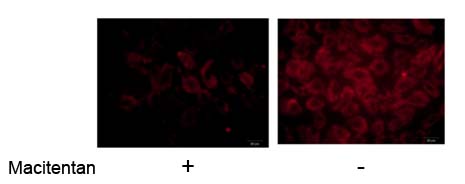
Roles of apelin and APJ in cardiovascular diseases Therapeutic potential of apelin/APJ in cardiovascular diseases Since the apelin/APJ system plays a key role in the occurrence and development of cardiovascular diseases, it seems logical to presume that targeting this axis should be feasible a
br Funding The present study was funded by The
2023-05-17
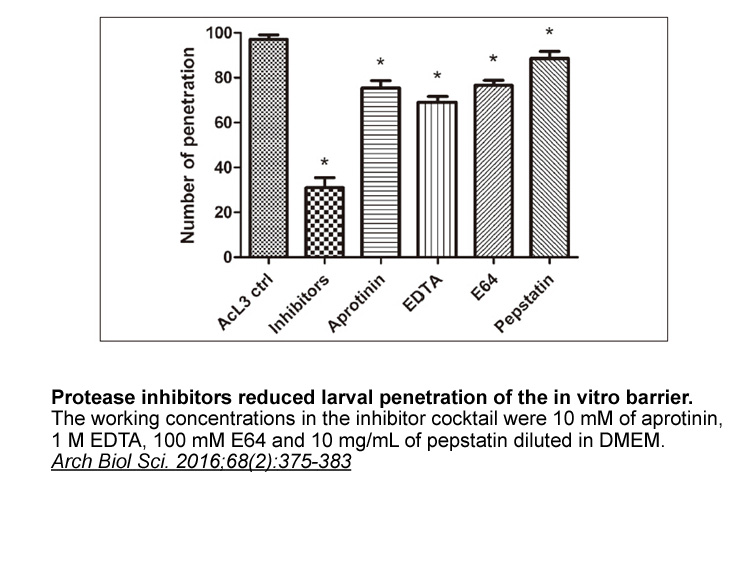
Funding The present study was funded by The Scientific and Technological Research Council of Turkey (TUBITAK) within Research Program 1001, unique project number: 214S349. Introduction The apelin receptor, also called APJ or angiotensin receptor-like 1 was first cloned in 1993 due to its stro
br Materials and methods br Results br Discussion
2023-05-17
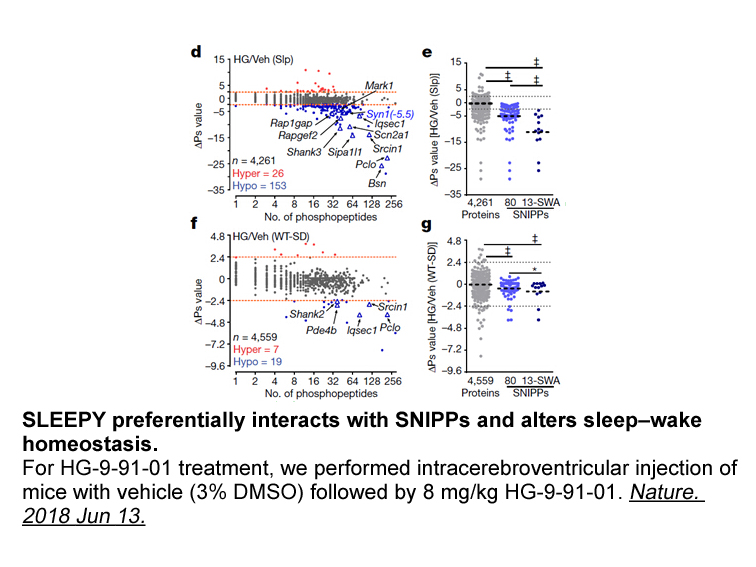
Materials and methods Results Discussion We demonstrate reduced angiogenic activity in NDRG1 overexpressing malignant glioma leading to reduced glioma growth. This antiangiogenic phenotype is paralleled by a significant upregulation of the antiangiogenic gene TNFSF15. TNFSF15 upregulation i
br Selective Androgen Receptor Modulators SARMs The AR and i
2023-05-17
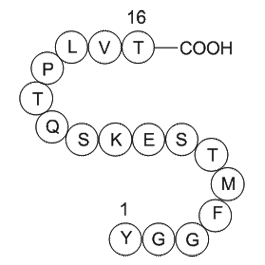
Selective Androgen Receptor Modulators (SARMs) The AR and its endogenous ligands, androgens, are important for development and maintenance of muscle and bone, secondary sexual organs, and development of other tissues (Mooradian et al., 1987). Although androgens are important for normal developmen
A number of studies suggest that
2023-05-15
A number of studies suggest that adiponectin promotes osteoblast differentiation and bone formation by directly targeting GSK-3β and β-Catenin signaling [64], [65], favoring bone marrow mesenchymal stem cell (BMSC) differentiation toward the osteoblastic lineage [66], [67], decreasing sympathetic to
In conclusion the results of this investigation
2023-05-15
In conclusion, the results of this investigation suggest that the involvement of PGE2 in the pathogenesis of pulpal inflammation and repair may be related to its induction of cAMP production. PGE2-induced cAMP production in dental pulp cells is mediated by binding to the EP2 receptor, activation of
br Autophagy and cell death pathways
2023-05-15
Autophagy and cell death pathways in ischemic stroke Although very important for the effects on post-ischemic ochratoxin injury, autophagy is not the only mechanism of action involved in cell death. Necrosis and apoptosis are two other distinct forms of cell death with great difference in morphol
br Materials and methods br Results br Discussion In the
2023-05-15
Materials and methods Results Discussion In the present study, we found that SSTR2, SSTR5, and DA2R proteins are expressed in ACTH-positive ghrp 6 australia in healthy canine pituitary glands, with particularly high positive cell ratios in the intermediate lobes. Somatostatin has been repo
Several structural classes of ASK
2023-05-15
Several structural bryostatin sale of ASK1 inhibitors, mostly from industry but also from academia, have been identified over the last decade. In 2012, Terao et al. (Takeda) reported imidazo[1,2-α]pyridine () as a potent ASK1 inhibitor derived from structure-based drug design. GSK, Merck and Gilea
br The lipoxygenase pathway in vascular
2023-05-15

The 12/15-lipoxygenase pathway in vascular physiology and pathology The mammalian 12- and 15-LOXs have high substrate specificity oxidizing predominantly ω−6 (arachidonic and linoleic acids) but also the ω−3 (docosahexanoic) Fmoc-Ile-Wang resin [86], [87], [88]. Different LOXs oxidize fatty acids
Fmoc-Ile-Wang resin Further validation for a role in LOX
2023-05-15
Further validation for a role in 12/15-LOX pathway in mediating adipocyte function comes from studies revealing a regulatory role of lipocalin-2 on 12/15-LOX activity. Lipocalin-2, a glycoprotein member of the lipocalin superfamily, is a novel abundant adipokine implicated in obesity-mediated inflam
br Introduction Alzheimer s disease AD is a neurodegenerativ
2023-05-15
Introduction Alzheimer's disease (AD) is a neurodegenerative disorder and the leading cause of dementia. It is characterized by progressive and irreversible damage to different Fmoc-Hyp-OH mg areas, resulting in cognitive impairment and behavioral changes (O'Neill, 2013, De Strooper and Karran,
Sphingolipids such as ceramides and glucosylceramides
2023-05-15
Sphingolipids, such as ceramides and glucosylceramides, are an important class of bioactive lipids. The levels of these lipids change as a function of adipose tissue mass and functionality, and are partially driven by cellular availability of palmitoyl-CoA. Aberrant accumulation of ceramide, glucosy
Serum soluble sCD is a shedding product
2023-05-11
Serum soluble sCD21 is a shedding product from the ectodomain of membrane CD21 after B cell activation (Masilamani et al., 2003, Masilamani et al., 2004a, Masilamani et al., 2004b, Grottenthaler et al., 2006, Hoefer et al., 2008), which resembles the ligand-binding capacity of intact CD21 (Wu et al.
Additionally in a previous transgenic model with autotaxin
2023-05-09
Additionally, in a previous transgenic model with autotaxin under the control of the MMTV-LTR promoter, aberrant expression of human autotaxin caused late-onset, metastatic breast cancer [5]. The AT-ATX transgenic model is analogous to the previous one because ∼30% of all spontaneous tumors appeared
8023 records 334/535 page Previous Next First page 上5页 331332333334335 下5页 Last page